Give Your AI a Memory
I stopped re-explaining context to Claude every session. Connecting it to NotebookLM gave our engineering firm a permanent second brain — and changed how we run proposals, post-mortems, and onboarding.
I've been running AI inside our engineering firm for over a year. I expected the bottleneck to be reasoning — that Claude would hit some limit on construction-specific judgment, contract nuance, or the messiness of real project data.
It wasn't reasoning. It was memory.
Every session started the same way. Paste the project context. Re-explain who we are. Re-establish the shape of the firm. Re-upload the same 50 pages of background. Then, finally, the actual work. By the time Claude was useful, I had spent 15 minutes priming it to know what every senior engineer in the firm already knows.
That's expensive. And it's worse than expensive — it's a tax that keeps the AI from ever reaching the part of the workflow where it actually compounds.
The fix is unglamorous
The fix is two tools, working in their lanes.
NotebookLM holds the firm memory. It's a Google product, free, designed around source-grounded reasoning. You upload your documents — proposals, project reports, RFIs, contracts, SOPs — and it indexes them. When you query a notebook, the answer is grounded in the sources. No hallucination, every claim cites the source paragraph it came from.
Claude does the reasoning. It's the analysis engine. It writes, drafts, critiques, and pulls patterns out of unstructured material. But Claude doesn't carry state between sessions, and uploading the same context every time doesn't scale.
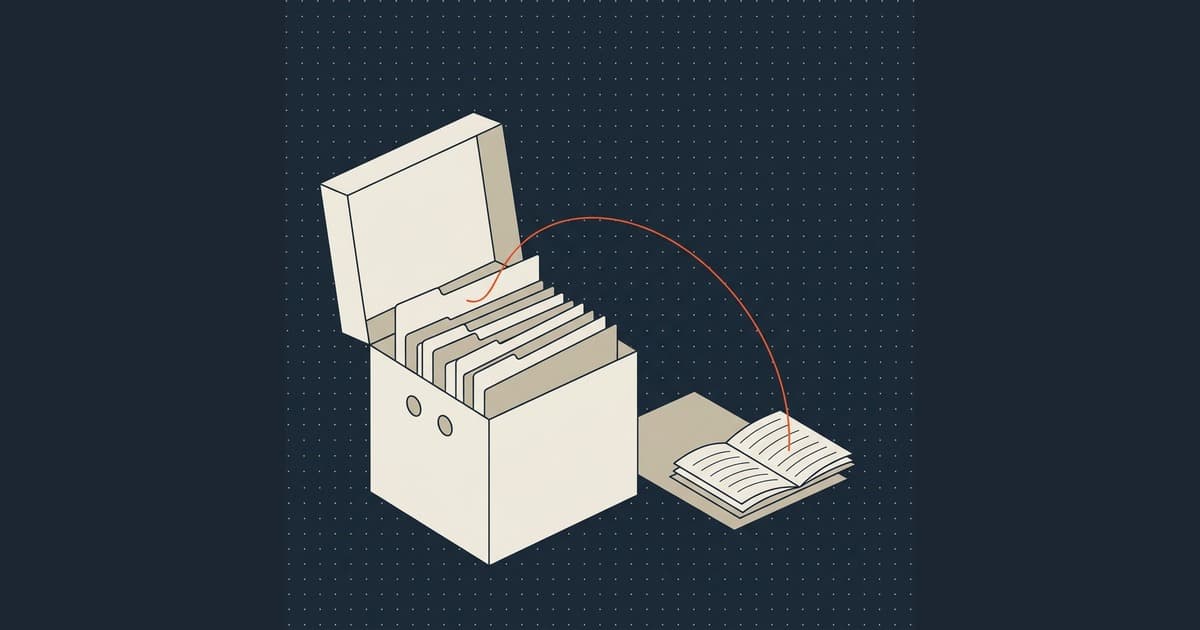
The combination is what changes the math. NotebookLM stores the institutional memory. Claude reaches over and grabs exactly what it needs for a specific task. The firm no longer rebuilds context from scratch. It accumulates it.
What it actually unlocks
Here's the part that matters — five workflows where firm memory changes the outcome.
1. Proposals drafted from past wins, not generic templates
Most firms write proposals from a template they last updated three years ago. A few clever bullet points. Some boilerplate about quality systems. A team CV section that hasn't been refreshed since the last person retired.
The wins are buried in old PDFs nobody reads.
Feed your last 10 winning bids into a NotebookLM notebook. Now Claude can pull from what's actually worked when you draft the next one. The technical narrative gets specific — references real projects, real outcomes, real numbers — because the source material is there. The win rate moves because the proposals stop looking like everyone else's.
2. Project post-mortems in minutes, not weeks
Every firm has a project that went sideways. Schedule slipped, RFIs piled up, the client got difficult, the contractor got difficult, you got blamed for things outside your scope.
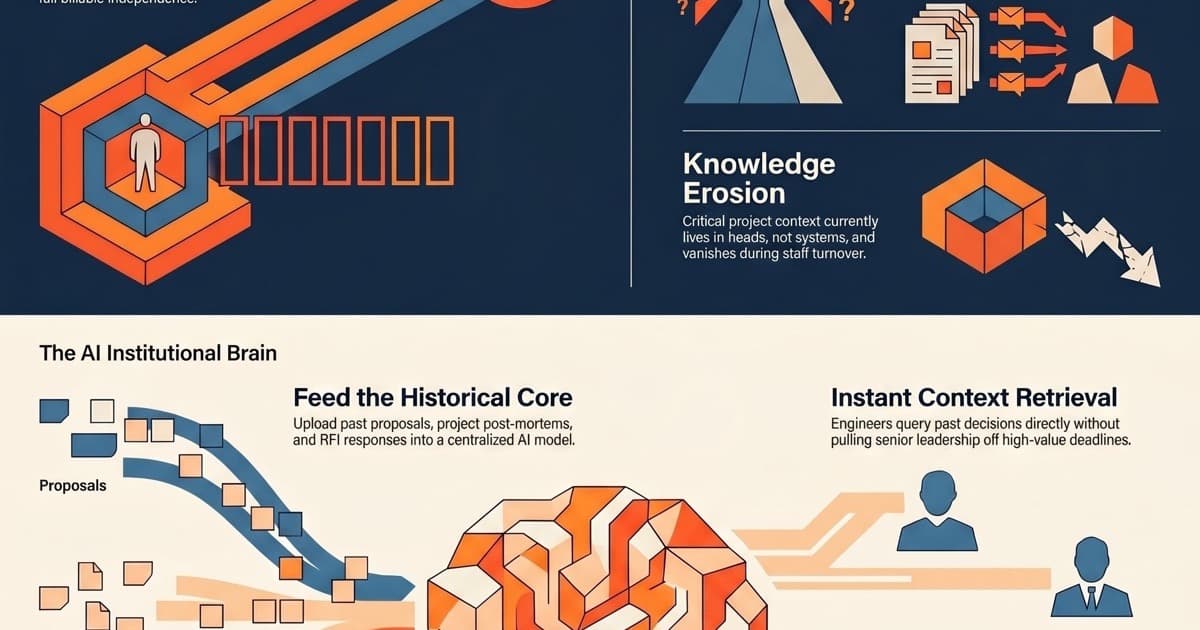
Normally that post-mortem never happens. It would take a senior partner two weeks to read through the file, and there's no time. So the lessons stay in three people's heads, and the firm makes the same mistakes on the next project.
Upload the project file — RFIs, schedules, correspondence, meeting minutes — into NotebookLM. Ask Claude "what went wrong, when did it start going wrong, and what were the early signals we missed." You get a structured answer in minutes. With citations. The firm captures the lesson once, and every project after benefits.
3. Onboarding without burning senior partner hours
A new engineer joins. Normally they spend the first month asking senior staff "how do we usually handle X" — burning hours of senior time on questions that have answered themselves a hundred times.
Give them a notebook with your SOPs, past decisions, and project history. They query the firm brain instead of the senior partner. The senior partner gets their billable hours back. The new engineer gets up to speed in days, not months.
4. Site due diligence that compresses a week into an afternoon
Twenty code documents. Thirty site reports. A planning history that goes back ten years. The kind of due diligence where a senior engineer reads for a week and produces a memo.
Drop the whole stack into a notebook. Ask the right structured questions. The memo writes itself, and the citations make it defensible — every claim points back to the source.
This is where the time savings stop being incremental and start being structural. A workflow that took a week now takes an afternoon. That's not a productivity improvement. That's a different kind of firm.
5. Client deliverables generated from your data
Engineering data is dense and most clients don't want to read it. They want a clear summary, a few decision-grade graphics, and a recommendation.
NotebookLM generates infographics, briefing notes, and audio overviews directly from your project documents. The output isn't slop — it's grounded in your actual sources. You spend ten minutes briefing it, get a draft, refine for an hour. The same deliverable would have taken a junior engineer two days.
The setup is simpler than you think
You don't need a data team. You don't need an integration platform. You don't need permission from IT.
You need a NotebookLM account (free), a Claude account, and a few hours to organize your first three notebooks. Start with one — your last five winning proposals. See what Claude does with it. Then add a second — past project reports. Then a third — SOPs and decisions.
Within a month, you have a firm brain. Within three months, you can't remember how the firm worked without one.
Why most firms aren't doing this yet
99% of engineering firms aren't running this setup. Not because it's hard, but because it's invisible. The firms that figure it out look the same as everyone else from the outside — until you see the proposal turnaround time, the post-mortem cadence, and the onboarding velocity.
Then it's obvious. They're operating on a different cost curve.
The window where this is a competitive advantage is narrow. In two years, every firm will run something like it. The ones that move first will have a multi-year head start on institutional memory — which is the kind of advantage that keeps compounding.
For us at ACE Consultancy, it's already changed how we approach proposals and project reviews. The next post in this series gets concrete on the notebook structures and prompt patterns we use day-to-day.
If you're an engineering firm director thinking about where AI actually fits in your operation, join the SigmaMetrix newsletter — short weekly breakdowns of what's working in AEC firms running on AI.