The Memory Problem Every Engineering Firm Has (and the Fix Most Haven't Tried)
Most engineering firms rebuild institutional knowledge from scratch every time someone leaves.
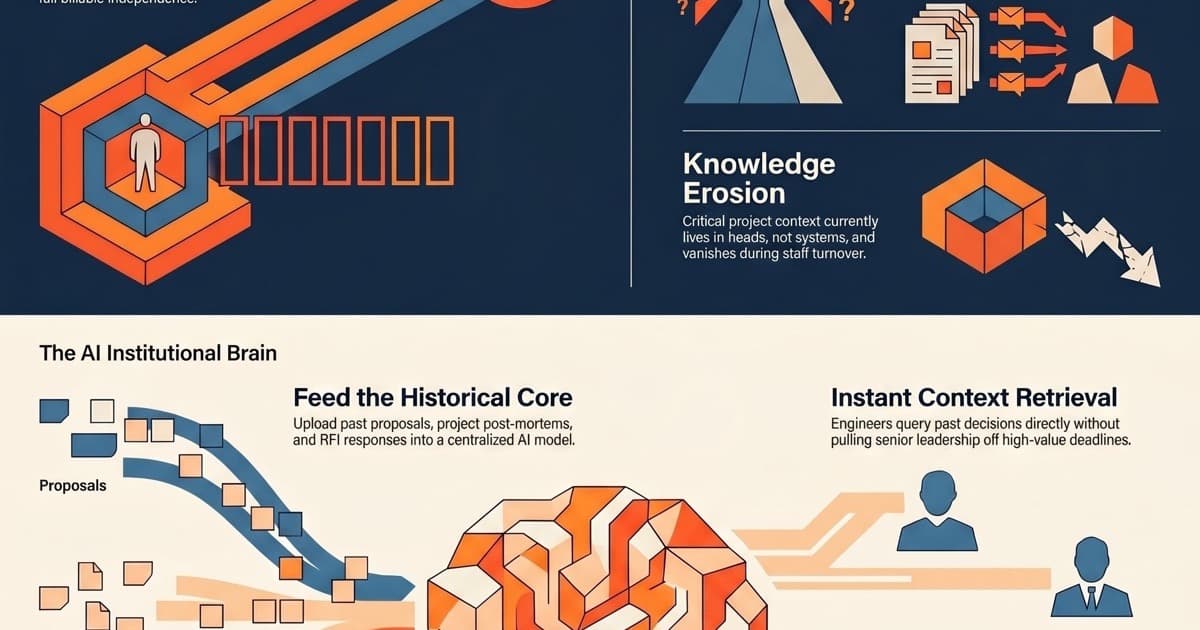
New hire arrives. Six months of shadow time before they're independent. Senior principal pulled off billable work to answer the same questions again. Knowledge that lived in three people's heads now lives in two. Or one.
That's not a training problem. It's a memory problem.
The fix that's quietly changing how a few firms handle this
Connect Claude to Google's NotebookLM and feed it the firm's actual history. Past proposals. Project post-mortems. RFI responses. Meeting minutes.
Once it's in there, the firm has something it didn't before. A searchable institutional brain that doesn't retire, doesn't get pulled onto a deadline, and doesn't have to be re-trained.
The mechanics are simple. NotebookLM ingests your documents and builds a grounded knowledge base. Claude queries against that base instead of inventing answers from generic training data. Every response cites the source document, so a senior can verify in seconds whether the AI got it right.
What this looks like in practice
Three workflows that change immediately when this is wired up:
- A new engineer queries past project decisions directly, without pulling a principal off their work. Instead of "ask Pieter, he was on that one," it becomes "the AI says we used a 1.2 safety factor on similar slope work in the SRDP III closeout report, page 14."
- Proposal drafts are grounded in the firm's own historical bids, not generic templates. The AI reads your last twelve proposals, identifies the win patterns, and drafts the next one in your firm's actual voice.
- After project closeout, AI-assisted post-mortems surface what went wrong, where margin leaked, what would change next time. Instead of post-mortems sitting unread in a SharePoint folder, they become a searchable corpus that informs every new bid.
The compounding part
The thing that surprises most directors when they set this up: the AI doesn't start from zero each session. Decisions made six months ago are still there. The rationale behind a contract call, a client negotiation, a scope change. It survives.
This is the leverage the platforms (Trimble, Autodesk, Procore) get by training on millions of construction documents. The small firm gets the same leverage by training on its own 50 documents, which contain more contextual signal per page than any platform's training corpus. Volume isn't the moat. Context is.
The firms that set this up in 2026 will compound this advantage every month. The ones that wait will hire, train, lose, and re-train, watching the same institutional knowledge cycle through the org without ever accumulating.
Most engineering firms haven't tried this yet. That gap won't last.
If you're a firm owner or MD still rebuilding context every time the team grows or a project closes, what's the first thing you'd want this system to remember?
Want to see where your firm stands? Take the free AI Readiness Audit — 7 questions, your own 2-page playbook, no sales call.

I Built an AI That Reads Contracts. Here's What Two Years of Hand-Reading Taught Me First.
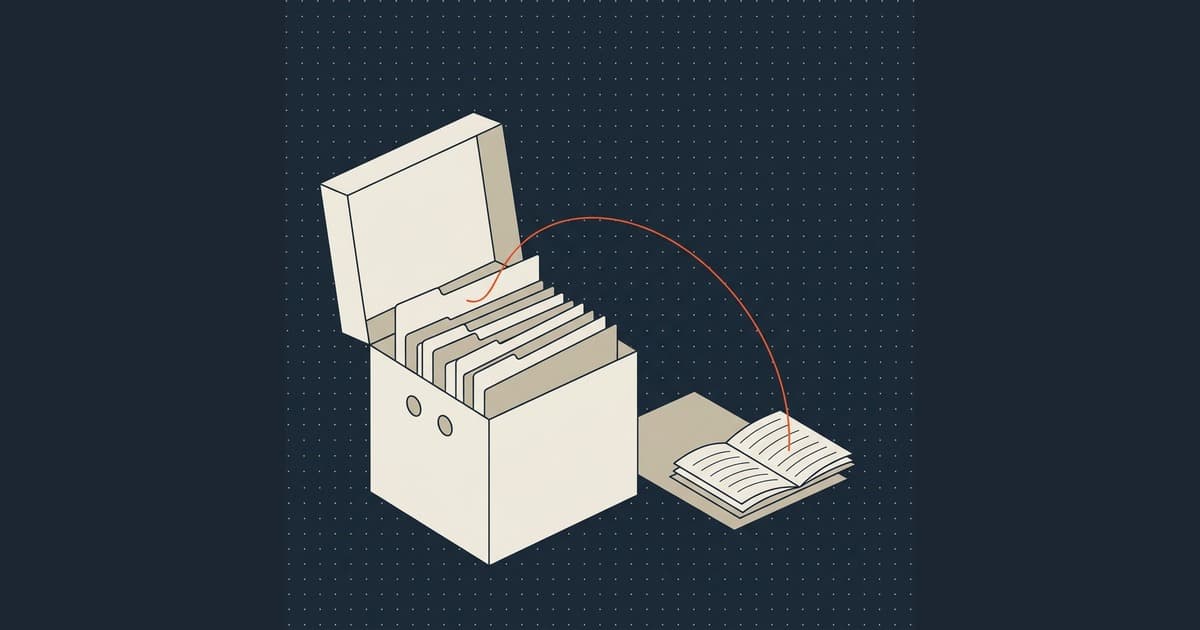
Give Your AI a Memory
I stopped re-explaining context to Claude every session. Connecting it to NotebookLM gave our engineering firm a permanent second brain — and changed how we run proposals, post-mortems, and onboarding.